

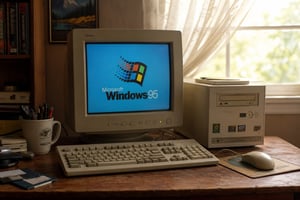
On This Day in Tech History: Windows 95 Launches and the Evolution of Cybersecurity
Written By: Jasmine Woerner
August 24, 1995. It was the day personal computing changed forever.
Microsoft's release of Windows 95 introduced features that are still part of our daily computing experience today: the Start Menu, Taskbar, desktop shortcuts, Plug-and-Play hardware support, and a more user-friendly graphical interface. For many people, it was their first real introduction to personal computing. The launch became one of the most celebrated events in technology history, helping bring computers from the office into everyday homes.
But while Windows 95 made technology easier to use, cybersecurity was a very different story.
Today, as organizations face sophisticated ransomware attacks, AI-powered cybercrime, and growing compliance requirements, it's remarkable to look back at how far both technology and security have evolved.
Security in 1995: A Simpler Digital World
When Windows 95 launched, cybersecurity was not a boardroom discussion.
Most businesses were focused on:
- Preventing hardware failures
- Backing up important files
- Maintaining local networks
- Protecting systems from relatively simple viruses
The internet was still in its infancy. Most users connected through dial-up modems, websites were basic, and online banking, cloud applications, and remote work were largely nonexistent.
Security measures were equally simple:
- Basic antivirus software
- Passwords that were often short and easy to guess
- Limited network monitoring
- Little to no formal cybersecurity training
The reality was that most organizations weren't being targeted by nation-state actors, organized cybercrime groups, or automated attack platforms. The threat landscape simply wasn't what it is today.
Security in 2026: Every Business is a Target
Fast forward more than thirty years, and the technology landscape has transformed completely.
Organizations now rely on:
- Cloud platforms
- Mobile devices
- Remote and hybrid workforces
- AI-powered tools
- Connected applications and services
While these innovations have increased productivity, they've also dramatically expanded the attack surface.
Today's organizations face:
- Ransomware attacks
- Business email compromise
- Identity-based attacks
- Supply chain compromises
- AI-enhanced phishing campaigns
- Regulatory and compliance requirements
Modern cybersecurity requires continuous monitoring, proactive threat hunting, vulnerability management, security awareness training, incident response planning, and executive-level security strategy.
What once required a simple antivirus program now demands an integrated security ecosystem.
The More Things Change, The More They Stay the Same
Despite the technological leap from Windows 95 to today's cloud-first environments, one thing remains true:
Technology should help organizations succeed, not create obstacles.
The challenge has shifted from simply making computers work to ensuring business can operate securely, efficiently, and confidently in an increasingly complex digital world.
OXEN's Journey Through the Evolution of Technology
While Windows 95 was transforming personal computing, the foundation of what would eventually become OXEN Technology has already been built years later.
The journey began in 1985 when Arlin Sorensen founded Computer Connection after recognizing the growing demand for technology in rural communities. What started as a small business operating from an addition on his home quickly evolved through education, training, and helping organizations understand how to leverage emerging technology.
As personal computers became more common through the late 1980s and early 1990s, the company expanded beyond hardware sales into networking infrastructure and technical services. Then came Windows 95, a milestone that accelerated technology adoption across business and households alike. Deman surged as organizations embraced computers as essential business tools, fueling significant growth and positioning the company for its next chapter.
Over the following decades, the organization continued to adapt to an ever-changing technology landscape. Through strategic mergers, acquisitions, and a transition from traditional break-fix support to managed services, the company evolved alongside its clients' needs. What became Heartland Technology Solutions ultimately transformed into the modern organization known today as OXEN Technology.
While technology has changed dramatically; from Apple II plus computers and Windows 95 to cloud platforms, cybersecurity, and artificial intelligence; the mission has remained remarkably consistent: helping organizations use technology to achieve more.
Today, OXEN continues that tradition of evolution, delivering a security-first approach that combines technology expertise, strategic guidance, and cybersecurity leadership to help organizations confidently navigate what's next.